Skip to content

The Cultural Significance of Indian Jewellery: Traditions, Rituals & Meaning
- by Adorn Themes
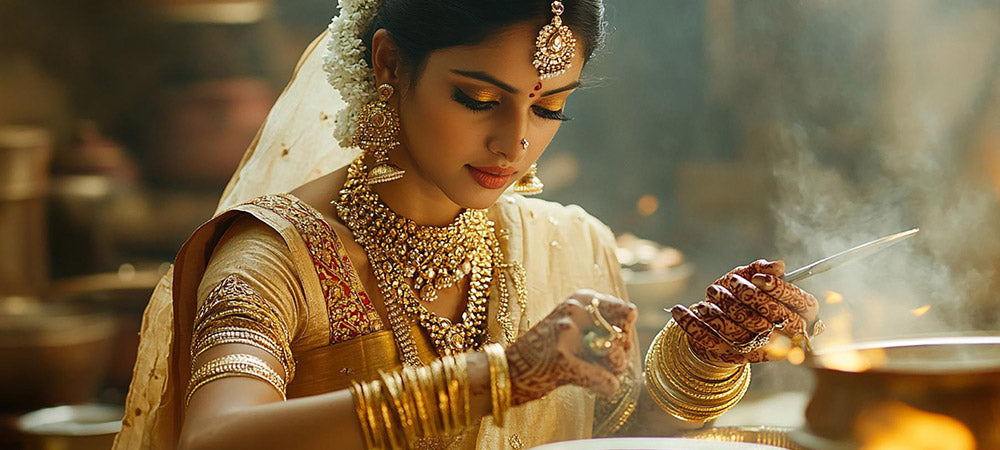
Indian jewellery is far more than adornment—it is a language of culture, spirituality, and identity woven through centuries of tradition. Each piece carries stories of rituals, celebrations, and the deep values that define Indian heritage. Understanding this significance transforms how we appreciate and wear these treasures.
The Sacred Role of Jewellery in Indian Rituals
In Indian tradition, jewellery marks life's most sacred moments. During weddings, a bride's jewellery is not merely decorative but symbolic of her transition, prosperity, and the blessings of her family. The mangalsutra, worn by married women, represents the bond of marriage and is considered auspicious and protective. Temple jewellery, with its intricate designs and spiritual motifs, is worn during religious ceremonies and festivals, connecting the wearer to divine blessings.
Each ritual—from naming ceremonies to festivals like Diwali and Navratri—calls for specific jewellery pieces. This practice reflects the belief that certain designs and metals carry spiritual energy and protection, making jewellery an integral part of spiritual observance rather than mere fashion.
Regional Traditions and Distinctive Styles
India's jewellery heritage varies beautifully across regions, each with its own distinctive aesthetic and craftsmanship. Kundan jewellery, originating from Rajasthan, showcases intricate gold work with precious stones set in a traditional technique that has been perfected over generations. Meenakari, the art of enamelling, adds vibrant colours and detailed patterns that tell stories of artistry and patience.
Temple jewellery, inspired by the ornaments adorning temple deities, features bold designs with religious symbolism. Bridal collections from different regions—whether from South India, North India, or the coastal areas—reflect local customs, colour preferences, and the significance of marriage within those communities. These regional variations are a testament to India's cultural diversity and the pride communities take in their heritage.
Symbolism in Design and Materials
Every element of Indian jewellery carries meaning. Gold, considered the most auspicious metal, symbolizes wealth, purity, and divine grace. Pearls represent innocence and calm, while gemstones like emeralds, rubies, and sapphires are believed to carry planetary influences and healing properties according to ancient Vedic traditions.
Design motifs—from lotus flowers representing purity to peacocks symbolizing beauty and grace—are carefully chosen to convey blessings and positive energy. Even the weight and style of a piece can indicate a woman's marital status, age, or social standing within traditional contexts, making jewellery a form of non-verbal communication deeply rooted in cultural understanding.
Jewellery as a Mark of Identity and Celebration
In Indian culture, jewellery is a celebration of femininity, strength, and heritage. It marks milestones—from a girl's first earrings to a bride's complete bridal set. Wearing traditional jewellery during festivals and family gatherings is a way of honouring ancestors, maintaining cultural continuity, and passing down traditions to the next generation.
For many, wearing Indian jewellery is an act of pride and connection to their roots. It is a statement that says: "I honour where I come from, and I celebrate the artistry and wisdom of my ancestors."
The Timeless Appeal of Traditional Jewellery
While fashion trends come and go, traditional Indian jewellery remains timeless. A well-crafted piece of Kundan or temple jewellery can be worn across generations, each wearing it adding their own memories and stories. This permanence reflects the values of durability, quality, and meaning that Indian culture places on true treasures.
Choosing to wear Indian jewellery is choosing to be part of a living tradition—one that celebrates craftsmanship, spirituality, and the beauty of cultural heritage. It is an investment not just in jewellery, but in identity, history, and the continuation of timeless artistry.